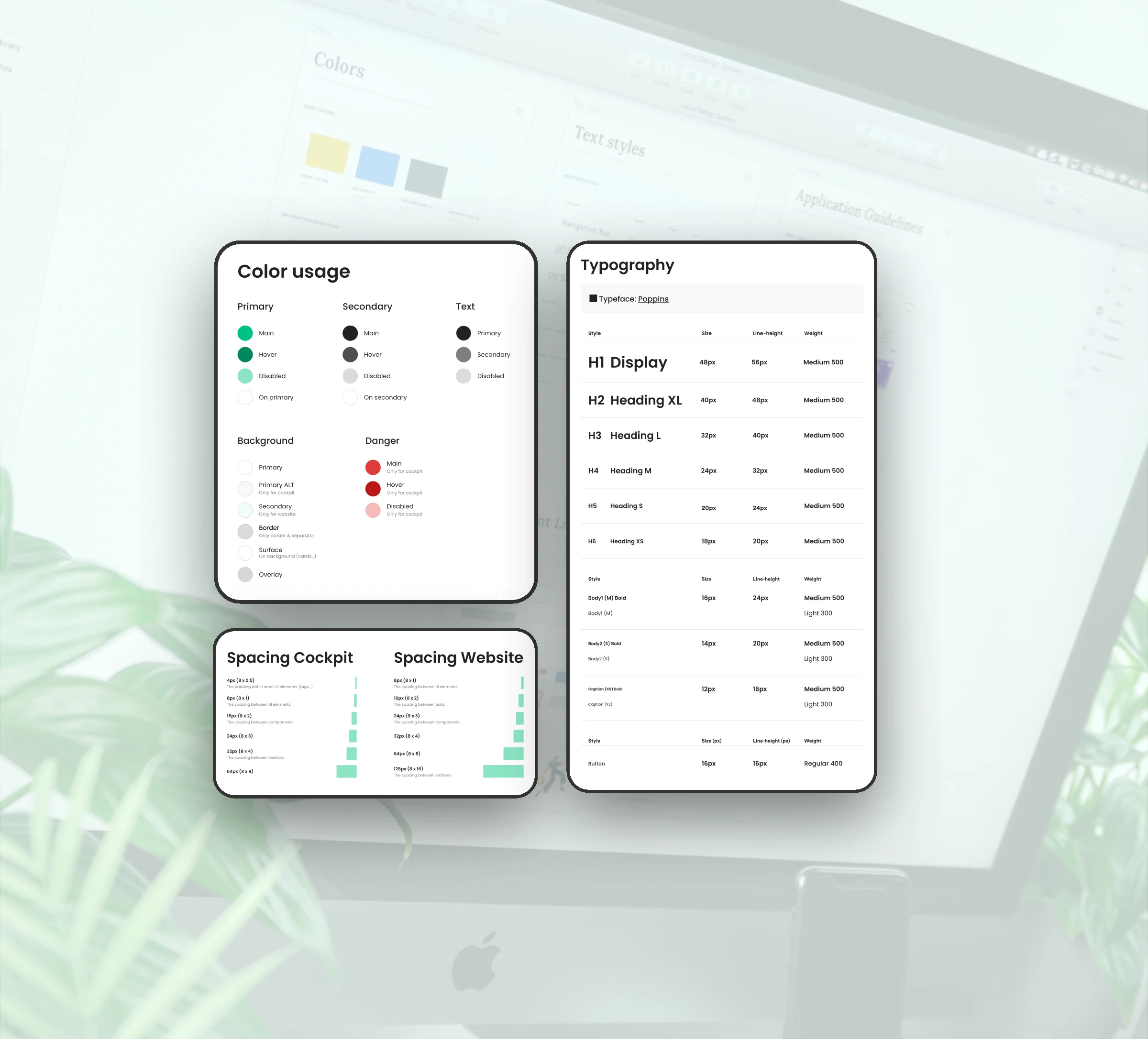
Self-Service Renewals on Fleet
Role
Product Designer
Duration
6 months
Tools
Figma · FigJam · Miro · Hotjar
Team
1 designer · 3 engineers · 1 product manager
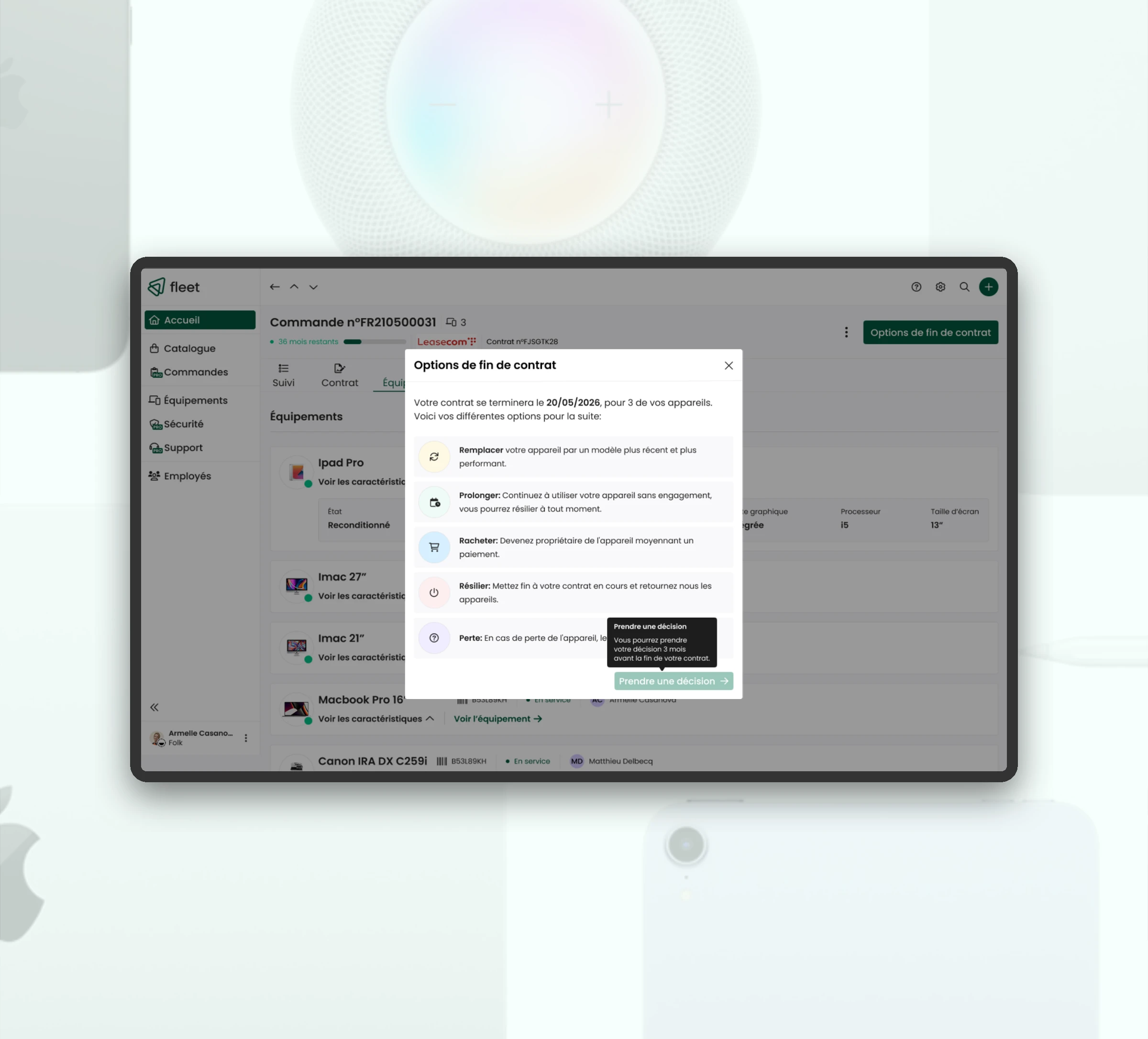
Renewal interface — option selection screen
01 — Context
Fleet helps companies manage their IT equipment fleet on a leasing basis. Previously, customers could only renew or change their subscriptions by contacting support. This created a heavy operational workload for internal teams and led some customers to switch to competitors before even realising they could renew directly with Fleet at better prices. The main challenge was to make subscription renewal simple and accessible directly on the platform, enabling customers to manage it independently while improving the overall experience.
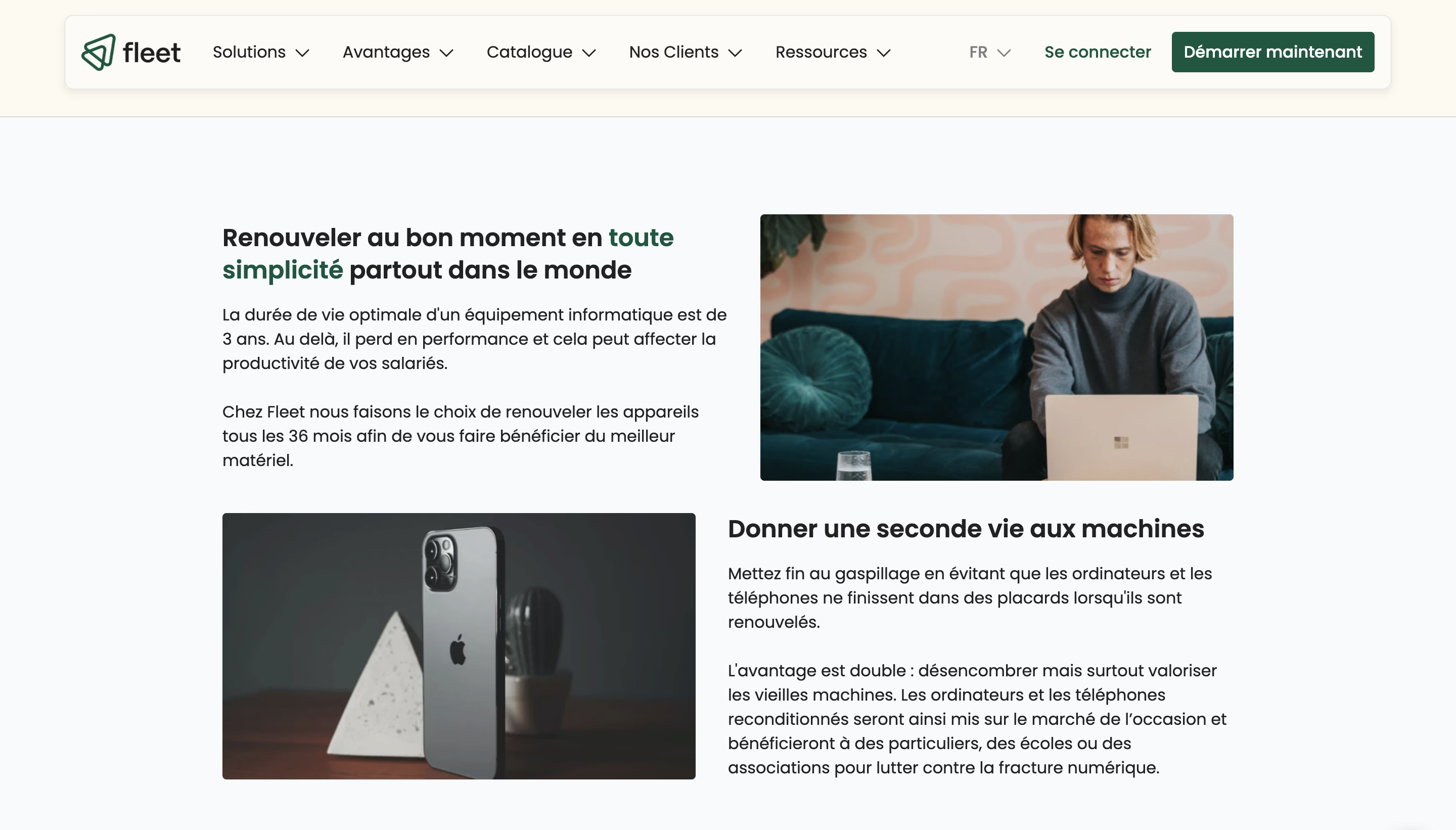
How subscription renewal works
My role: Product Designer responsible for designing the self-service renewal journey, from research to delivery.
"15% of support requests were renewal requests, taking up a significant share of the team's time on an avoidable task."
— Initial brief, Fleet
02 — Discovery
To better understand the problem, we first conducted internal interviews with support and sales teams to map the existing renewal process and identify operational pain points. We then carried out user interviews with customers whose subscriptions were nearing their end, to understand their expectations and frustrations. Two key needs emerged. On one hand, clearer renewal options and guidance throughout the process. On the other, transparent pricing and conditions to confidently make a decision.
Insight 01
Contract opacity
Customers had no way of knowing when their subscriptions were expiring without contacting support or checking their original contract, making any forward planning impossible.
Insight 02
Unguided process
No indication of available options, pricing, or deadlines to meet: customers were navigating blind at every contract end.
Insight 03
Structural support dependency
Every renewal required multiple back-and-forth exchanges with the Fleet team, creating a costly bottleneck for both sides.
03 — Delivery
We explored renewal journeys through a Crazy 8 workshop and prioritised solutions using a MoSCoW framework to define the MVP. Wireframes and interactive prototypes were then tested with users to validate clarity and usability.
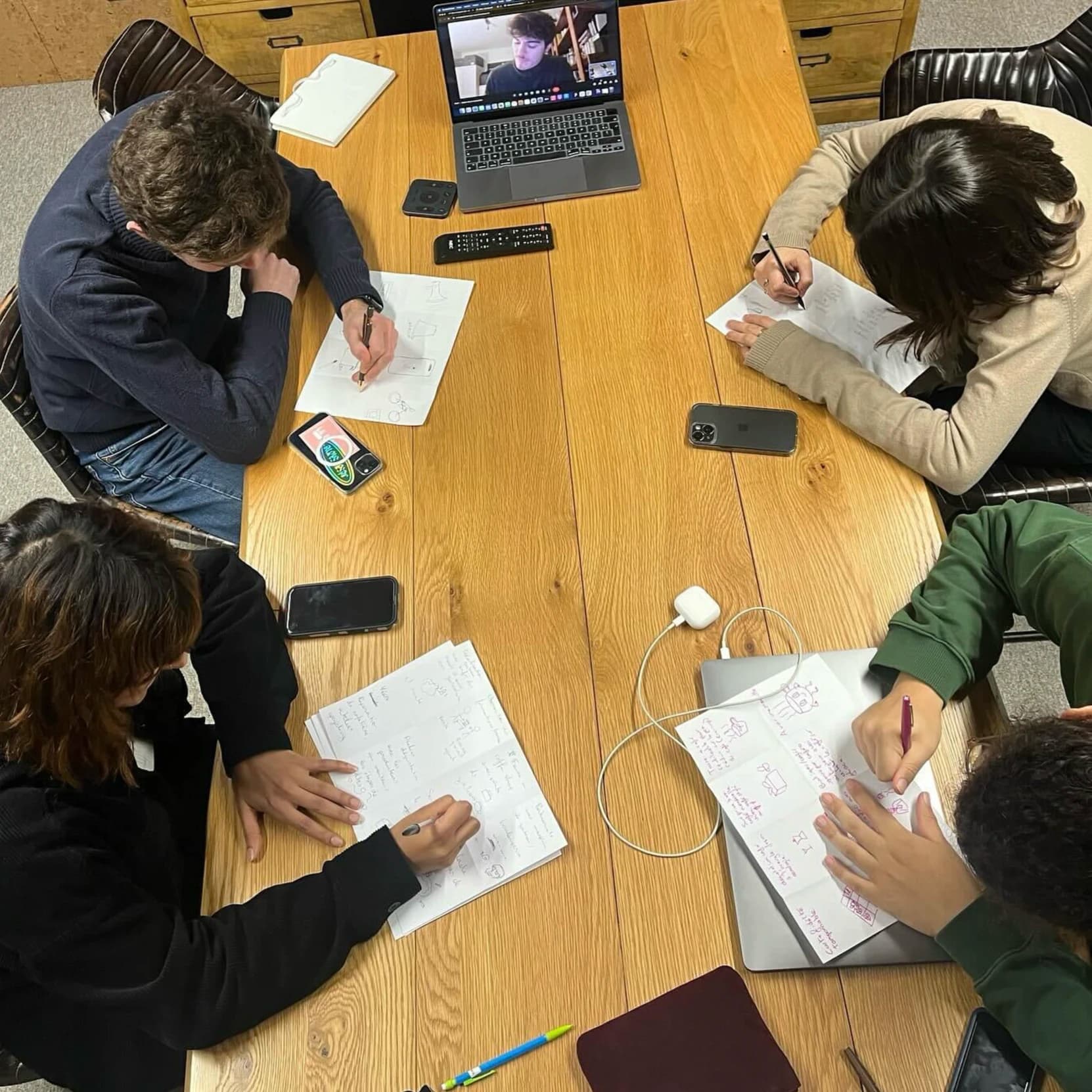
Ideation workshop with the team
The final solution introduced a guided, self-service renewal flow integrated into the platform. Customers can now review, compare and renew their subscriptions independently, without contacting support.
+13%
Subscription renewals
−25%
Support requests related to renewals
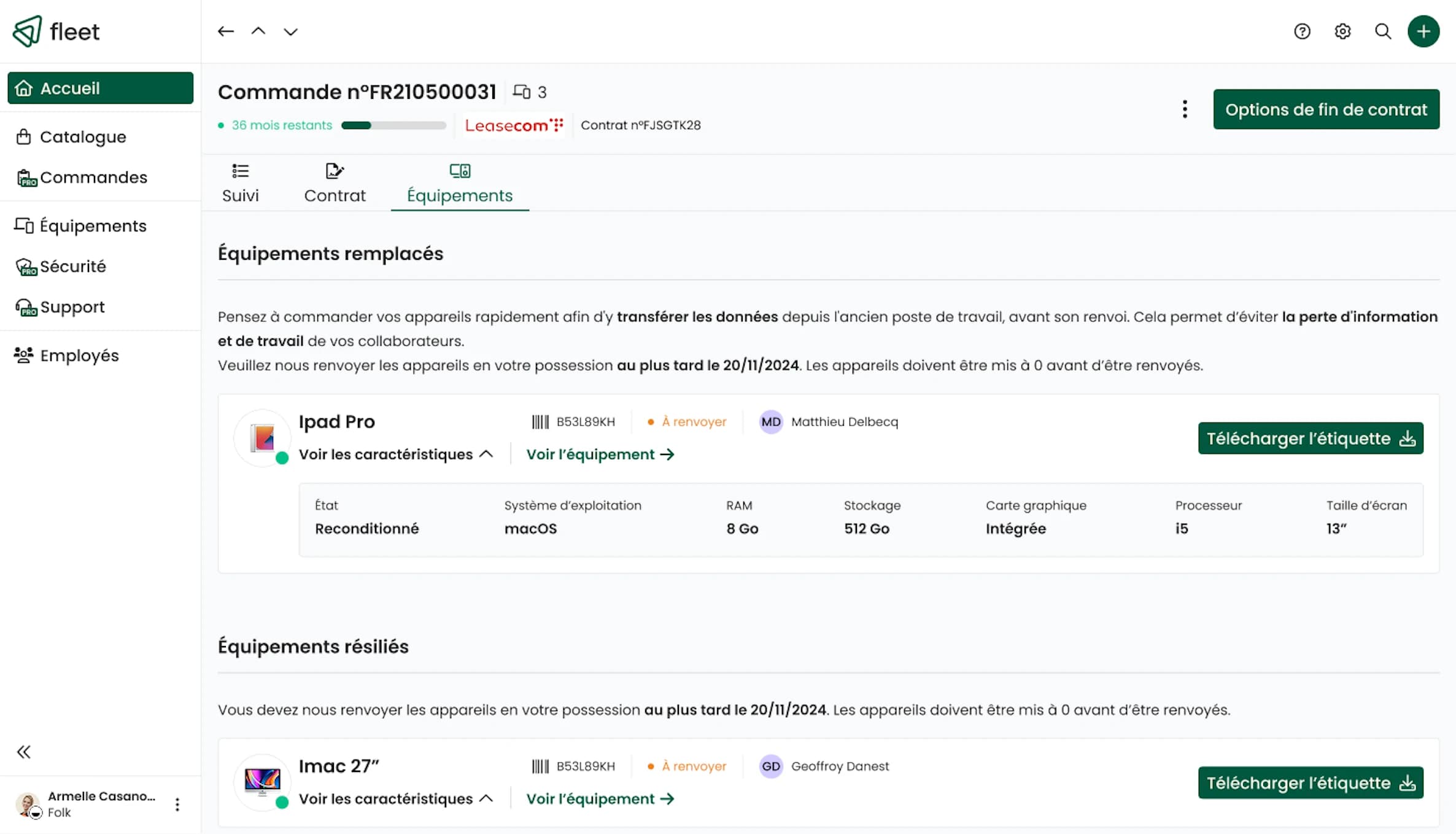
Final interface of the renewal project
04 — Learnings
This project taught me that the real barrier to renewal wasn't process complexity, but a lack of confidence. Customers didn't know what to expect: not the pricing, not the conditions, not the deadlines. Their natural reflex was to call support, not because they needed help, but because they needed reassurance. Designing for self-service was ultimately designing for trust. Every step of the journey had to be clear and reassuring enough to replace the safety net of a human conversation. Pricing and condition transparency wasn't a secondary detail: it was the very condition for autonomy.