Creating Fleet's New Design System
Role
Senior Product Designer
Duration
4 months
Tools
Figma · Storybook · Zeroheight
Team
2 designers · 5 engineers
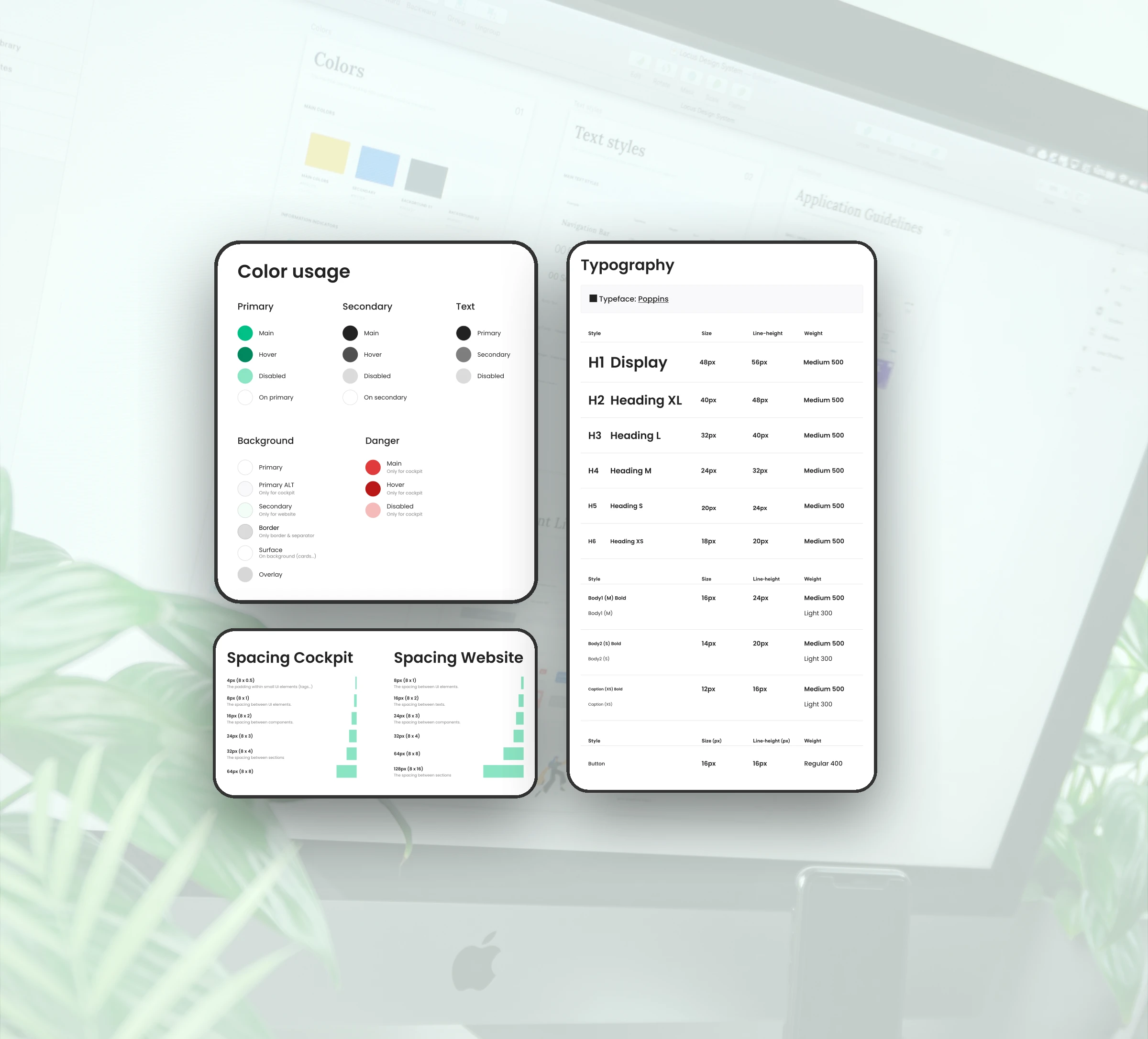
Fleet Design System component library — 2023
01 — Context
Since Fleet was created, developers had continuously built a fully custom Storybook component library without a shared foundation or systemic logic. This accumulated 3 years of design debt: duplicated components, inconsistent styles, no documentation. Every new feature took 30% longer due to the lack of consistency. Fleet's rebranding became the opportunity to both modernize the interface for a more B2B-oriented audience and lay the foundations for a coherent, modular and scalable Design System.
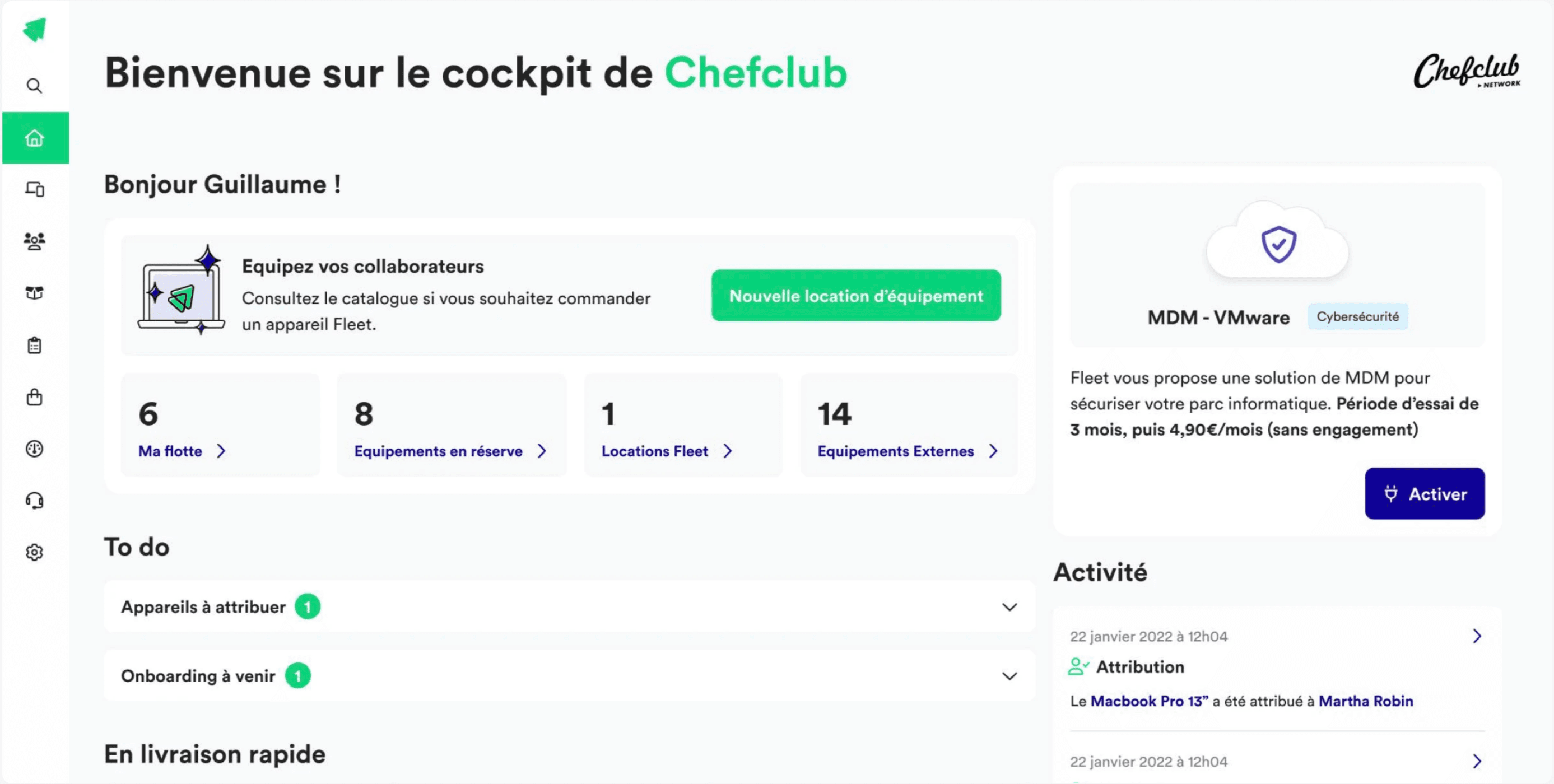
Interface avant la mise en place du Design System
My role: co-lead the design system, building it on Material UI and Atomic Design principles, with measurable adoption.
"The same component existed in five different forms across the codebase. Nobody knew which one was right."
— Initial audit, Fleet
02 — Discovery
We began with a full audit of Fleet's 2 products, interviewing 6 developers and 2 designers, to identify UI misalignments, component variations and interaction problems across pages. The analysis revealed duplication, lack of uniformity and the absence of shared standards: 340 components in the codebase for only 80 distinct patterns needed. To structure the redesign, we adopted Material UI as a React-based open-source foundation, accelerating development, ensuring built-in consistency and reducing technical complexity. We then defined an atomic structure, organizing components into atoms, molecules and organisms to enable reuse, scalability and easier maintenance.
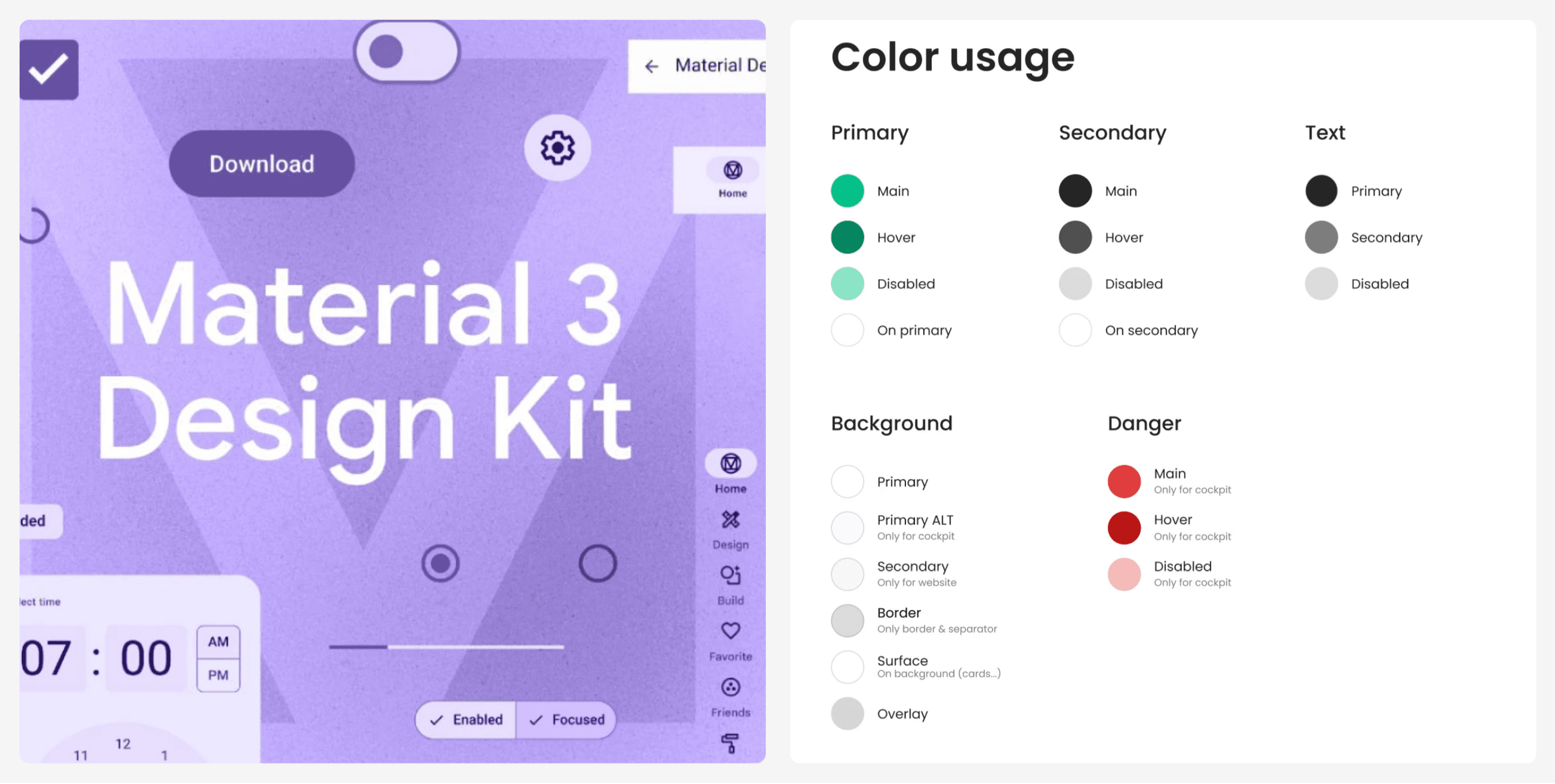
Insight 01
Accumulated debt
340 components in the codebase for only 80 distinct patterns, 4x redundancy.
Insight 02
Dev/design friction
Developers were recreating components due to the lack of a shared source of truth.
Insight 03
Slow onboarding
A new designer took 3 weeks to become productive, just to learn the conventions.
03 — Delivery
We built a robust, actionable Design System for both design and development teams: harmonized colors and typography with the new branding, reduced border radius for a more structured B2B look, a consistent icon set and updated illustrations aligned with the brand identity. 80 documented components were delivered with a Figma library connected to code via Storybook and a documentation site on Zeroheight. Each component includes clear usage guidelines to ensure consistency and ease of adoption. Results after 6 months: −40% feature development time, onboarding reduced to 3 days.
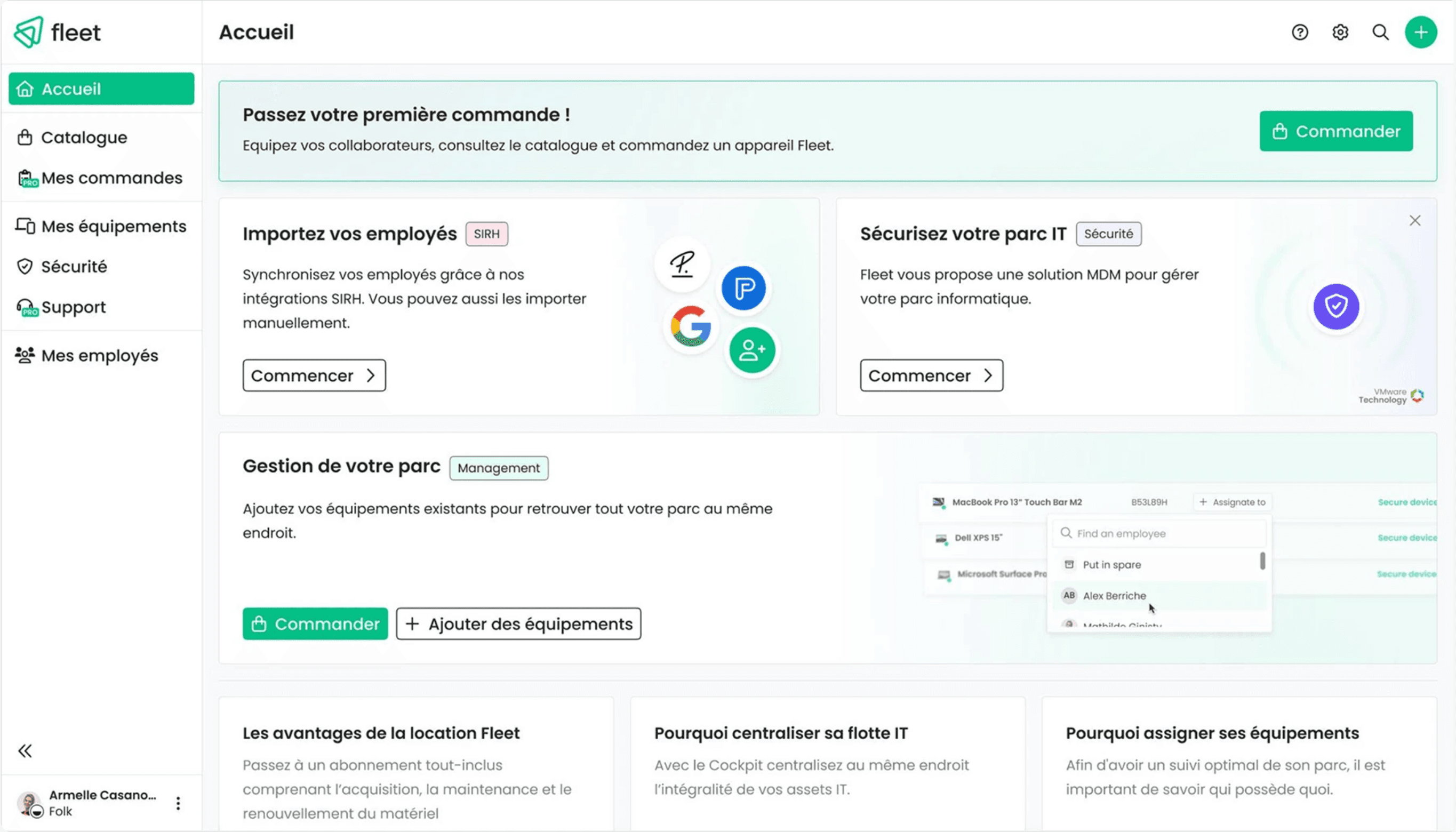
80
Components
−40%
Dev time
3d
Onboarding
04 — Learnings
A design system is not a design project: it's a product whose users are the teams. Adopting this mindset from the start (interviews, roadmap, feedback loops) was the key to adoption. Timing also mattered: pairing the DS with a rebranding created the rare conditions where both design and engineering were aligned on the need for change, making it easier to justify the investment and accelerate adoption.
Projet suivant →
Building Rakuten's Claims Management Service
Curious minds make the best collaborators.
Let's explore, question and design solutions together.
Let's talk →+33 7 45 52 34 39
elaine.jouffroy@gmail.com