Building Rakuten's Claims Management Service
Role
Product Designer
Duration
8 months
Tools
Figma · FullStory · Jira
Team
2 designers · 4 engineers
Claims management interface — Rakuten France, 2025
01 — Context
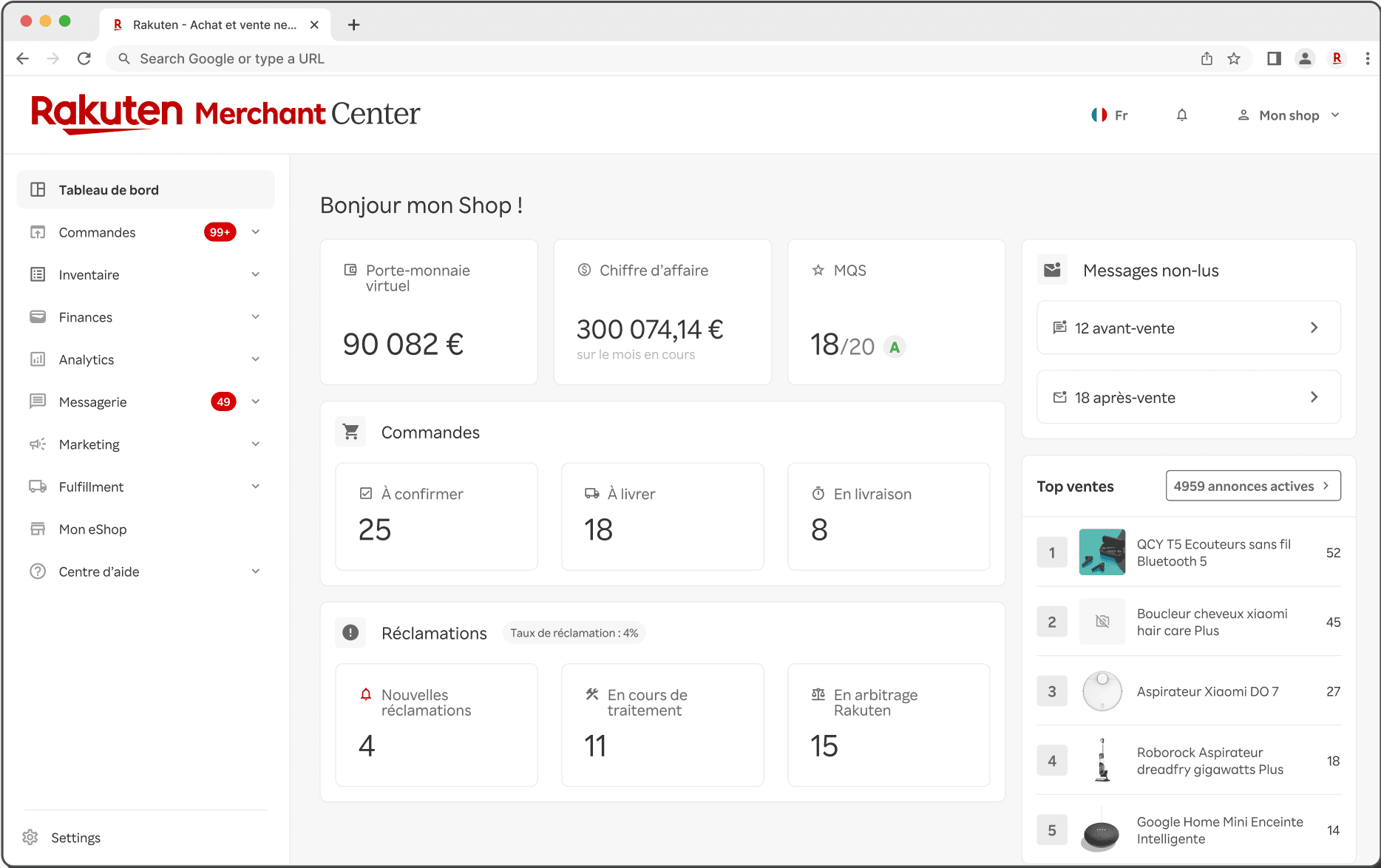
This project focused on the merchant side of Rakuten's marketplace: the sellers, not the end buyers. The project started as a redesign of legacy order management. But early research quickly revealed the real priority: claims handling. While orders were mostly managed through integrators and APIs, claims still forced merchants through a manual, untracked process in the Merchant Center, creating friction at every scale, from small sellers to major accounts like Boulanger.
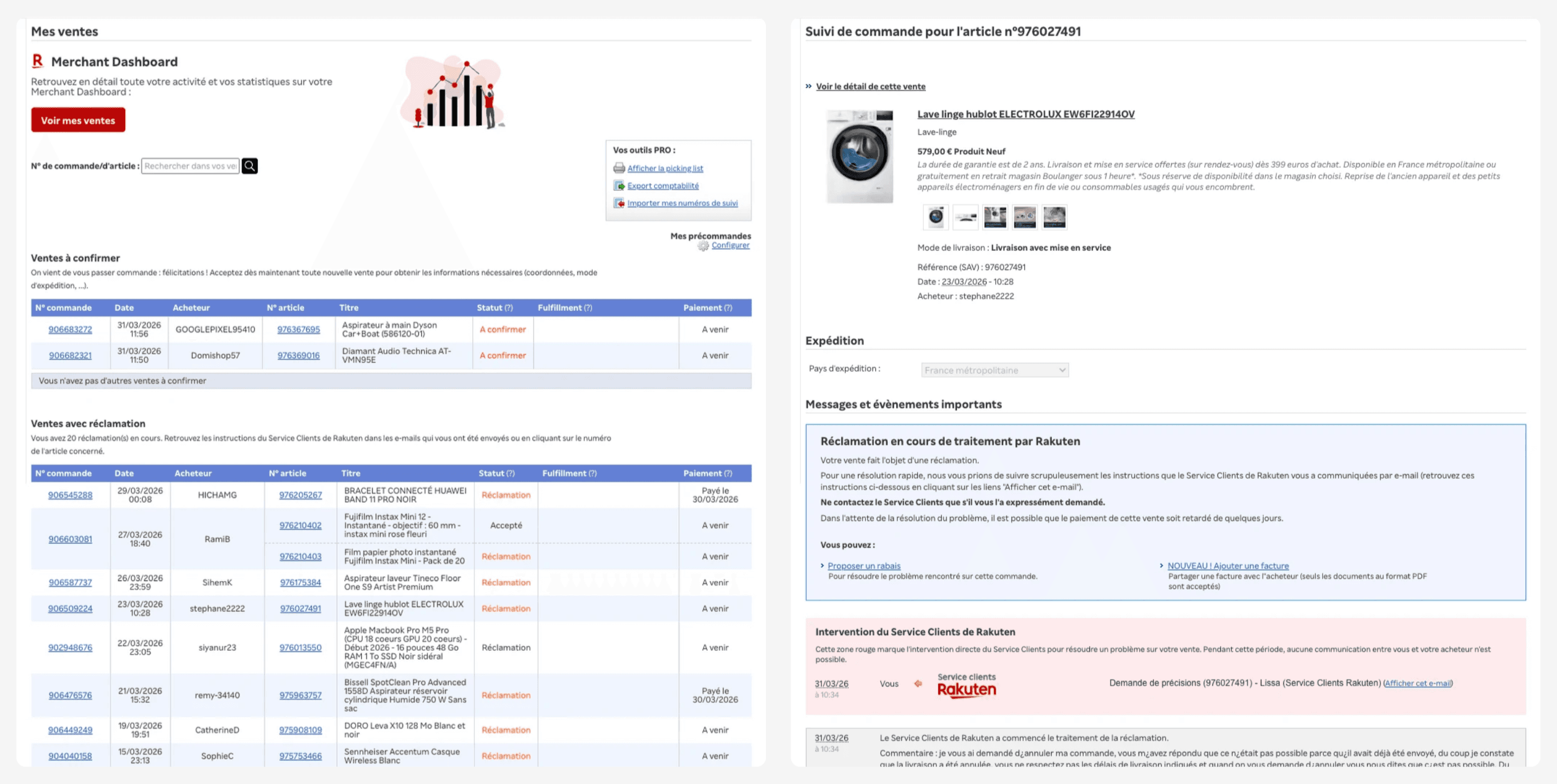
This led us to reprioritise the entire roadmap around claims.
My role: Product Designer dedicated to the merchant experience, leading the end-to-end redesign of the claims journey, from research to delivery.
"Every morning, I open Rakuten and log each new claim one by one into my spreadsheet: type, date, reason. It takes forever."
— Amandine, Head of Customer Service · Gpasplus
02 — Discovery
In parallel, insights from the Buyers team, data analysis, and merchant interviews revealed several friction points: an average resolution time of 4.5 days, a process handled through a third-party service, and a fragmented journey across multiple channels, with no consistent way to sort or track claims. Merchants also struggled to reach Customer Care in blocking situations.
We then mapped real-life journeys with the User Care team to identify the most critical gaps. These findings directly shaped the prioritised opportunities to improve the experience for both merchants and buyers.
Insight 01
No filtering or tracking
Merchants had no way to filter, sort, or track the status of their claims from opening to resolution.
Insight 02
Too many channels
Claims were scattered across emails, item-level messages, and private buyer threads, with no option to attach supporting documents.
Insight 03
Blocked resolutions
Even when merchants found a viable solution, claims were often blocked by the 3-day policy window or the type of claim raised.
Insight 04
No Customer Service access
In dispute situations, merchants had no direct way to escalate to Rakuten Customer Service, leaving them stuck without support.
03 — Delivery
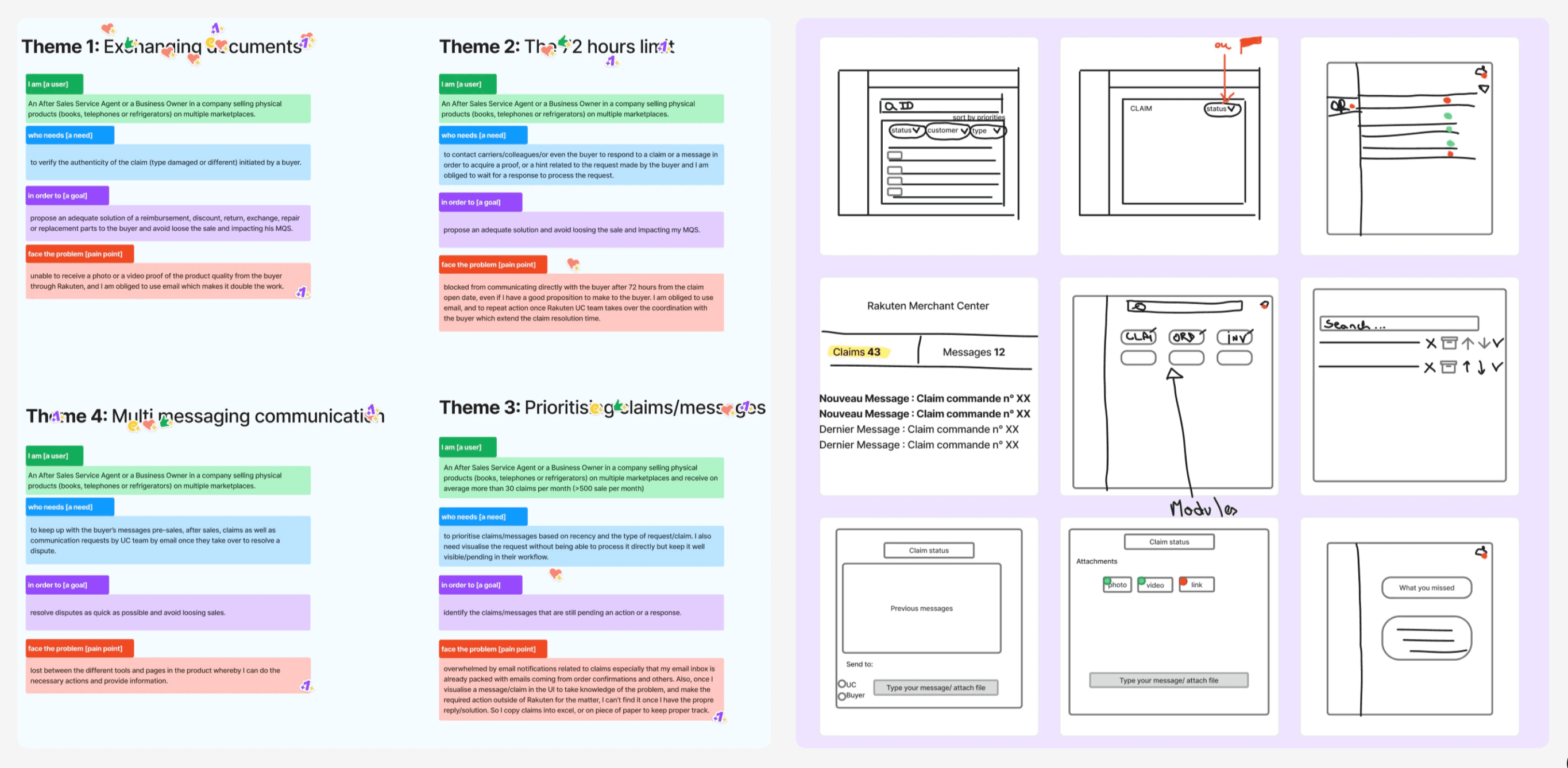
We ran collaborative workshops with cross-functional stakeholders to align on the core problems and co-build solutions, drawing on competitive benchmarks from Mirakl and ManoMano to shape our first solutions.
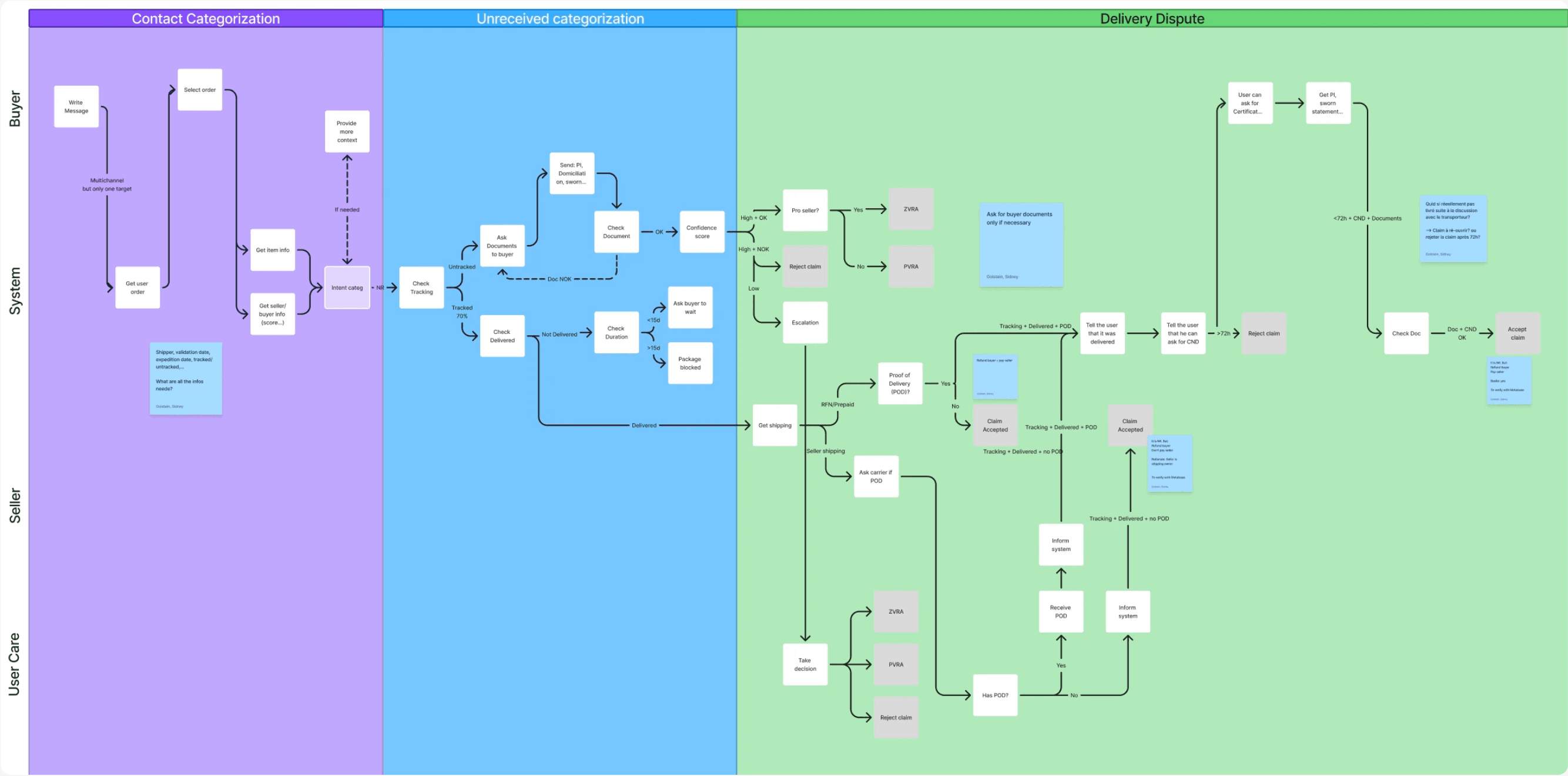
We redesigned the claims journeys end-to-end, introducing key moments where the system, powered by AI, could automatically analyse supporting documents and images to suggest resolutions without requiring User Care escalation.
These designs were tested with merchants across two rounds of usability sessions. One gap stood out clearly: merchants struggled to understand the financial outcome of a resolved claim. To address this, I designed a dedicated payment block and refined the Resolved status to explicitly show whether the payment had been retained or cancelled, removing a major source of post-resolution confusion.
−30%
Claim resolution time (4.5d → 3.15d)
−20%
Manual contacts handled by User Care
04 — Learnings
This project reinforced how critical it is to challenge the initial brief before committing to a direction. What started as an order management redesign became a far more impactful claims overhaul, simply because we listened to users early enough to change course. I also learned that for a merchant, resolving a claim isn't enough on its own. They need to understand the financial outcome at a glance: what they kept, what was cancelled. Without that transparency, even a well-handled claim leaves a lingering sense of opacity.
Projet suivant →
Enabling Self-Service Renewals on Fleet
Curious minds make the best collaborators.
Let's explore, question and design solutions together.
Let's talk →+33 7 45 52 34 39
elaine.jouffroy@gmail.com